

Fines, Fees, Points, and Legal Consequences
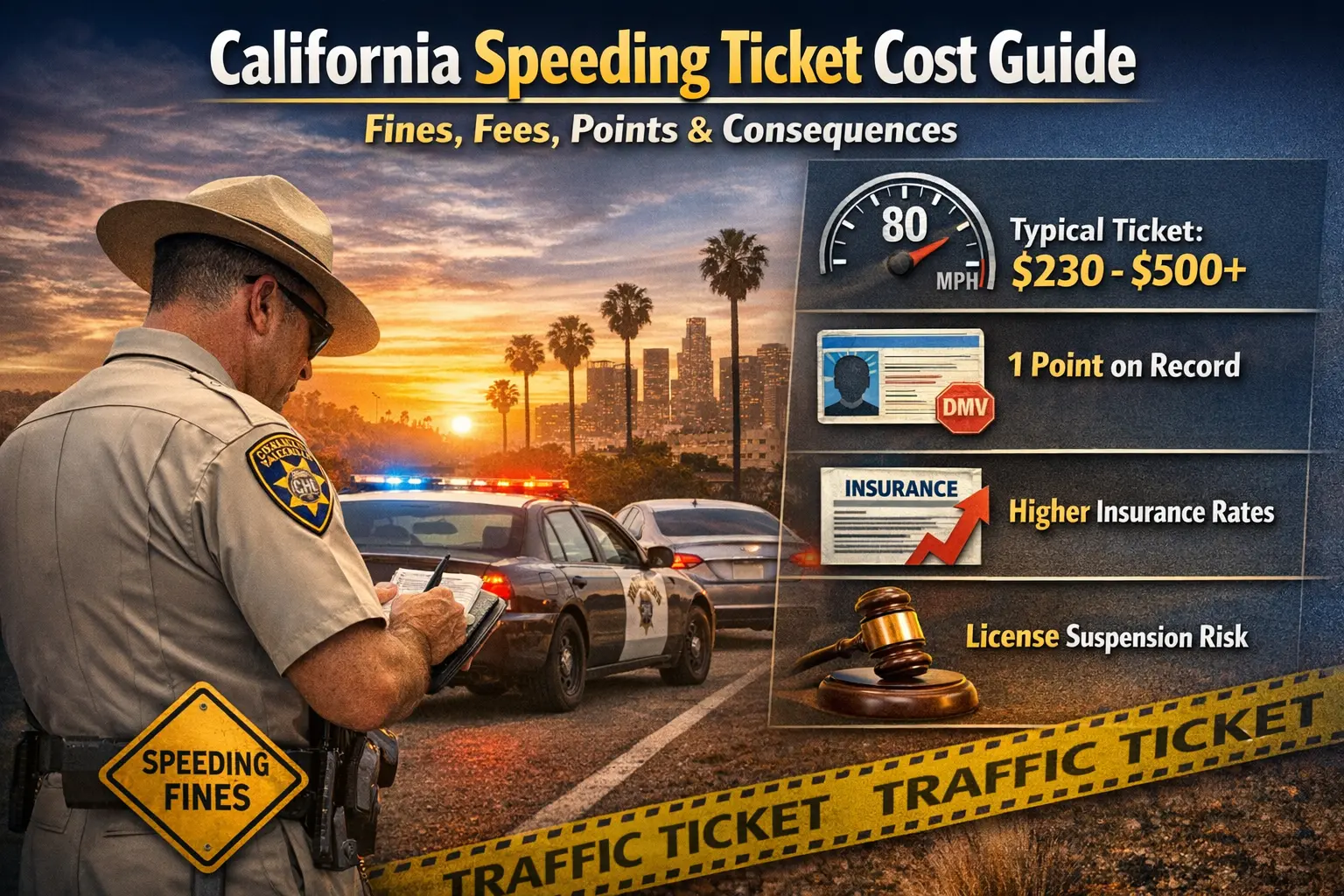
Speeding tickets in California are among the most costly traffic violations in the United States once mandatory penalties and administrative fees are added. Many drivers are surprised to learn that the fine listed on a citation represents only a small portion of the total amount owed. Beyond financial penalties, a speeding ticket can affect a driver’s license status, insurance rates, and long-term driving record.
This guide explains how speeding ticket costs are calculated in California, how points and penalties work, and what legal consequences drivers should understand.
How Speeding Laws Are Enforced in California
California enforces speed limits under both posted speed limit laws and the Basic Speed Law.
The Basic Speed Law requires drivers to operate their vehicles at a safe speed for current road, traffic, and weather conditions, regardless of the posted limit. This means a driver can receive a speeding ticket even if traveling below the speed limit when conditions make that speed unsafe.
Posted speed limits are also strictly enforced and include:
-
Maximum freeway speeds, generally 65 or 70 miles per hour
-
Reduced speeds on two-lane highways
-
Lower limits in residential, school, and construction zones
Violations of either standard may result in a speeding citation.
Base Fines vs Total Speeding Ticket Cost
One of the most confusing aspects of a California speeding ticket is the difference between the base fine and the final amount owed.
Base Fine Amounts
California law establishes relatively low base fines based on how far over the speed limit a driver was traveling:
-
1–15 mph over the limit: $35
-
16–25 mph over the limit: $70
-
26 mph or more over the limit: $100
These amounts are set by statute and appear modest at first glance.
Why the Total Cost Is Much Higher
In addition to the base fine, California courts add multiple mandatory fees and penalty assessments. These assessments fund various state and county programs and significantly increase the total cost of a ticket.
Common added costs include:
-
State penalty assessments
-
County penalty assessments
-
Court operations and construction fees
-
Emergency medical services assessments
-
Conviction and administrative fees
Because of these additions, the final amount a driver pays is often five to seven times the base fine.
Typical Total Costs After Fees
While exact totals vary slightly by county, most drivers can expect to pay approximately:
-
1–15 mph over the limit: $230 to $250
-
16–25 mph over the limit: $360 to $380
-
26 mph or more over the limit: $480 to $500 or more
These figures represent the total cost after all required fees are applied.
Speeding Ticket Costs in Special Zones
Certain locations carry enhanced penalties due to increased safety risks.
Construction and Work Zones
Speeding in construction zones often results in higher fines. Courts may double the base fine or apply additional assessments, even when construction workers are not visibly present.
School Zones
School zones are closely monitored, and speeding violations in these areas may lead to higher penalties. Courts and insurance providers often treat school-zone violations more seriously due to the increased risk to pedestrians.
Points on Your California Driving Record
Most speeding tickets in California result in points added to a driver’s record through the Department of Motor Vehicles.
Point Values
-
Standard speeding violation: 1 point
-
Severe or excessive speeding (such as over 100 mph): 2 points
Points remain on a driving record for several years and are visible to insurance companies.
License Consequences Under the DMV Point System
California uses a point-based system to identify negligent operators.
A driver may face license suspension or probation if they accumulate:
-
4 points within 12 months
-
6 points within 24 months
-
8 points within 36 months
Multiple speeding tickets within a short period can quickly place a driver at risk of DMV action.
Speeding Over 100 Miles Per Hour
California imposes stricter penalties for drivers cited at speeds exceeding 100 miles per hour.
Possible consequences include:
-
Substantially higher fines
-
Two points on the driver’s license
-
Potential license suspension
-
Mandatory court appearance
Repeat offenses at these speeds carry increasingly severe penalties.
Traffic School Eligibility
Many drivers cited for speeding may be eligible to attend traffic school.
Traffic school:
-
Allows the driver to avoid having the point appear on their public driving record
-
Does not eliminate the fine or court fees
-
Is generally available once every 18 months
Successful completion helps limit insurance increases, though eligibility depends on the driver’s record and the specific violation.
Insurance Impact of a Speeding Ticket
The long-term financial impact of a speeding ticket often comes from increased insurance premiums rather than the fine itself.
Insurance companies typically:
-
Increase rates after a speeding conviction
-
Apply higher increases for multiple or severe violations
-
Maintain increased premiums for several years
Drivers with prior violations or DUI-related offenses may experience significantly higher insurance consequences.
Legal Consequences Beyond Fines
Failure to Respond to a Ticket
Ignoring a speeding ticket can result in additional penalties, including:
-
Additional fines
-
License suspension
-
Collection actions by the court
Drivers must respond by paying the fine, requesting traffic school if eligible, or appearing in court.
Risk of Reckless Driving Charges
In cases involving excessive speed or dangerous driving behavior, law enforcement may pursue reckless driving charges. These offenses carry heavier penalties and more serious legal consequences than standard speeding infractions.
Speed Enforcement and Road Safety in California
Speed enforcement is a key component of California’s road safety strategy. Law enforcement agencies frequently increase enforcement in high-risk areas, during holiday weekends, and near DUI checkpoints.
Speeding is often associated with impaired or aggressive driving, which is why officers may focus on both speed and sobriety enforcement during traffic safety operations.
Practical Takeaways for California Drivers
-
Speeding tickets in California are costly due to mandatory fees
-
Even minor speeding violations can affect insurance rates
-
Accumulating points can lead to license suspension
-
Special zones carry enhanced penalties
-
Awareness and compliance are the best ways to avoid long-term consequences
Final Thoughts
A California speeding ticket is more than a simple traffic citation. Between fines, fees, points, and insurance consequences, the true cost can be substantial. Understanding how these penalties work helps drivers make informed decisions and appreciate the importance of safe driving practices.
Staying aware of traffic laws, enforcement patterns, and the potential consequences of speeding can help drivers protect both their finances and their driving privileges.

Avvo | Website | Yelp